Tracking a Problem – Post 1

Datum: Latest Parkrun result 29:27 (Best 21:56, Worst: 30:38 (5/5/2018))


This may be a short run thing, but I wondered if there was interest in following the progress of an illness.

Filling in some background.

18 years ago one of my eyes stopped tracking properly, which was slightly odd. It turns out that this is a common first presentation of Multiple Sclerosis (MS). After a week in hospital receiving steroid injections to dampen down my immune system the issue basically went away. As MS requires multiple presentations to positively identify I have been living with the potential rather than an actual diagnosis. Mostly this has been fine and has not affected my life in the slightest (although I have found it a convenient excuse for being rubbish at things like football :-)), but every now and then I would feel that things (movements, body responses, muscle spasms) have not been “quite right” and wonder if it was related. However, as there was nothing definitive nothing could really be done.

Until now

6 months ago I was training for the Queenstown half marathon and found that after 10km my right leg was not responding properly and would start dragging. Initially, I blamed being unfit although as per usual I wondered if it could be MS related. Sure enough, it happened in the event and I had to drag myself into Queenstown adding 40min to my best time and busting a big toenail in the process.

As Deborah and I have been doing the Christchurch 5km Parkrun on a weekly basis I have been able to keep an eye on things. I have noticed that the leg symptoms would arrive earlier and earlier, and naturally, my times were getting worse and worse. Finally, about 6 weeks ago the leg symptoms were basically constant and I was starting to notice small issues in my arms. I scheduled a meeting with a neurologist – John Fink. He was pretty certain that it was MS and an MRI scan later confirmed signs of myelin degradation (I will elaborate in another post what that is) which backed up that conclusion.

Treatment has begun and it turns out quite a bit has changed in the MS field in 18 years.

First, although steroids are still used to get MS symptoms under control, some bright spark determined that taking pills was just as effective as via IV. This has the added bonus of not requiring a hospital admission. In almost all cases this is preferable for the patient and saves about $10,000 to the health system! Alas, as well as the usual side effects of mucking up my taste buds, I had the unexpected addition of a drug reaction which involved feeling rubbish and coming out with a full body rash that took about a week to go away (see image). That has largely passed and I am now waiting for my MS symptoms to clear. This could take awhile as recovery time is roughly related to how long it takes the symptoms to develop.

However, already I think there is a slight improvement.

On a slight downside, since I have had a drug reaction, if I have to do another steroid round they will probably have to go back to an IV delivery and admit me to hospital.

The Second change is that in the last 3-5 years there have been significant advances in the MS treatment available. Essentially these are drugs that are taken for life and in many cases seem to be stalling the progression of the illness. Good news. Even better, although these are expensive, Pharmac are funding them if you meet the criteria. Apparently, I do.

While obviously happy about this, this is actually a bit sobering. Pharmac is reasonably rational and if they have determined that it is better to spend $20k/year for the rest of my life, as opposed to the future costs of letting the disease run its course, then things are pretty serious.

At this point the likely prognosis is that the symptoms of this episode will fade, I will go on the drugs, and from an external perspective life will carry on as normal. However, it is also possible that it could get worse.

To hold this narrative together I am giving a rough datum measure at the top of the post. This is my 5km parkrun time which Debs and I do most weeks. Running was an early indicator that things weren’t right and excluding other impacts (like age and having a craft beer bar open up around the corner from our house) this should give a rough idea of progress. If it gets back to the 22-23 min mark, I should be okay for most activities, although I would be best to try for PB’s sooner rather than later. If it gets to 24-26 min, I will probably have to abandon activities that require fine motor skills, like skiing and setting running PB’s, but should be okay for things like mountain biking. If it stays where it is at the moment then I will have long-term low-level symptoms. If it gets worse then I might have to organise a working bee to build a wheelchair ramp to access my house.

Watch this space.

Well Well! Success at last!

Well wouldn’t you know it, after a couple of attempts, multiple submissions, and a few edits to satisfy the Press, I finally got published!

There were a few things to learn from the process, like being able to address a topic that is reasonably hot at the time. However, writing style-wise, the main thing seems to be that paragraphs need to be short for opinion pieces. Here is the link to the final version on Stuff which you can see ended up being slightly different to the submitted version below.

At some point, I will write something to respond to the key critiques in the comment section, but as that will probably be for my own amusement and completeness it is unlikely to happen in a hurry.

The most cutting critique seems to suggest that I don’t think tertiary education is a good thing. Given my own qualification list, this is clearly not the case, and I firmly believe that everyone should be given every opportunity to reach their potential.

My main issue is that the way we choose to fund tertiary education at present ends up being, completely unintentionally, the largest institutional injustice in New Zealand (in dollar and numerical terms). For those who are concerned about identifying and addressing such things that should be a source of concern.

________________________________________

Published – The Press – November 10, 2017

A Counter-Intuitive Result: Why removing student fees is an odd policy for Labour

Labour’s removal of fees for the first year of tertiary study is clearly a response to the perceived unfairness of moving away from the fully subsidised tertiary education system of the past. It has also been touted as a way to increase access to tertiary education for those who would be put off by the cost. On the surface these are both popular and laudable reasons for adopting this policy.
However, although tertiary fees have been justified as necessary to cover the cost of ever increasing student numbers, the fact that they reduce inequality, and make the tax system fairer, is a less intuitive outcome.
As it turns out, removing fees is not a policy you would expect from the Labour party given the typical constituent it claims’ to represent.
It is important to realise that most government expenditure (approximately 83%) is spent equally on all New Zealanders – a form of a universal basic income (UBI) mainly provided through services instead of cash. The big ticket items are public healthcare, compulsory primary and secondary education, superannuation, and core government services such as roading, law and order, and defence. Even without NZ’s slightly progressive tax rate this results in a transfer of wealth from the richest to the poorest as those above the average income pay more tax than they get back in services, and vice versa. This is generally seen as a good outcome as it helps to alleviate inequalities in society.
Government expenditure on tertiary education is an exception. Those studying clearly receive more benefits than those that do not and, while technically available to all, attendance in tertiary education is highly correlated with the social status of one’s parents. Therefore, government subsidies are effectively a regressive tax where the richest have their education subsidised by the poorest. In NZ, those who do not study at tertiary level miss out on approximately $1000/year (or $80,000 over the average lifetime) in government benefits.
Although extremely unlikely to happen, making tertiary education compulsory would go some way to addressing this issue, but would still be limited by the significant difference in course costs. For example, those doing science based courses would benefit more than those doing humanities. There also seems to be wide acceptance that tertiary training is not the necessary or preferred choice for all.
As a thought experiment, imagine a system where students paid the full cost of study and the existing spending on tertiary subsidies was instead paid equally to everyone as a cash payment of $1000 per year, for life. People could use this for tertiary education, or instead choose to do something else they view as more valuable. While it would not make tertiary education universal, it would make the subsidy universal so that it would be fairer to everyone. Alas, trusting people with their own money is usually a step too far for most governments.
The current middle ground of students paying for part of their education goes some way to solving the problem. Those doing tertiary study still benefit enormously (students only pay around 23% of the course costs) but it is not quite as unfair as a fully subsidised system. The student loan scheme helps to ensure access for all and, despite appearances, also benefits the poorest as the requirement to repay is linked to future earnings.
There is clearly a concern that fees introduce a psychological or practical barrier preventing those who should study from accessing tertiary training. However, a wholesale elimination of fees is an extremely expensive way to address this. As a comparison, for the same cost we could continue to charge those already planning to study and then pay the fees for an extra 100% more students who need encouragement (this of course ignores the massive costs associated with simply having more students, but this would also apply to the zero fee scheme). Although removing fees will probably see an increase in student numbers, it is unlikely to be on this scale. If access is the main issue being addressed, this indicates that there are probably better and more cost-effective solutions.
Sceptics might argue that improving access has never really been the main concern. It is likely that those already planning to study will be the primary beneficiaries of having fees removed. No doubt they will be very grateful (in politically practical ways) to be able to pocket the extra subsidy while conveniently forgetting the cost imposed on those not doing tertiary training.
Although a universal payment system described above would be fairer to all, the existing fee paying system is probably the best option we can hope for at the moment. However, Labour have responded to the call to return to the “good old days” when tertiary training was “free”, despite the inherent inequality of this. Presumably only those who have already, are now, or will pay the fees are being heard rather than those currently missing out.
Labour should realise that tertiary fees do a reasonable job of reducing a benefit largely captured by the well-off. In the short term it might be politically beneficial to scrap fees but on closer examination, free tertiary education is not well aligned with Labour’s vision for a more equitable society. To achieve that, there are better ways this money could be spent.

Theology of Economics – Part 2

This is the second sermon I gave at Ilam Baptist where I tried to flesh out my thoughts on the linkages between economics and theology.

Part 1 was basically a challenge to theology from economics. In it I argued that due to the impacts of the industrial revolution we are now living is a completely different economic paradigm to the rest of human history. Since the bible was written pre the industrial revolution I think that much of its instruction on economic matters needs to at least be looked at again.  The more aggressive side of me would argue for a complete revision, but that is a step to far for many.

In Part 2 I am trying to describe how economics and theology might differ.  In effect I am trying to distinguish whose sand pit is whose.

After delivering this I tried to come up with a pithy summary for the whole sermon and the best I could do was.

“Economics is interested in how we redistribute scarce resources. Theology is interested in who we are if we have no resources at all”

It’s not  quite accurate, and also tends to annoy theologians, but it was worth a crack :-).

As always any feedback would be well received.

Here is the audio and the power-point slides to go along with it.

Theology and Economics Part 2 201509


Theology of Economics – Part 1

This is a sermon that I gave at Ilam Baptist Church trying to flesh out the links between economics and theology. They have changed their website recently so I now have to host it here on the odd chance that people might want to listen to it.

This sermon was partially given because I was getting extremely frustrated with the dominant econ/theology views being expressed. They were either people with a strong theology background who dabbled in economics because they perceived, rightly or wrongly, that there was some social justice issue to address, or they were mildly rabid christian capitalists who believe (perhaps correctly :-)) that the market is a gift from God and can’t be critised. I am not comfortable with either of these perspectives as I don’t think it does justice to theology or economics.

Naturally I like to think that I have a unique, and of course absolutely correct (:-)) view, but I will let you be the judge.

Clearly being labelled “Part 1” indicates that there are more to come – an in due time I will post the second.

By the way, I used a relatively large Monty Python sketch in this sermon to set the scene. If you want to watch it on YouTube, here is the link but it is very skipable.

Also, you will need to follow along with the Power Point Slides which I have attached. It should be pretty easy to figure out when to move along.

By the way, I am always on for discussion about this so fire away.

Happy listening.

Theology and Economics 201407


Potentially a life goal

A few of the reasons I think a universal allowance is worth aiming for.

I was intending to post this after I had performed the mammoth task of getting the background analysis refined into a final, readable form (it is in a 30 pg draft at the moment!). However, discussions about the pros and cons of a universal allowance (it goes under a few different terms incl: universal basic income (UBI) , universal benefit (UB)) have unexpectedly hit the national, and international, media so I felt compelled to post a stripped down version of this as a comment on STUFF.

https://www.stuff.co.nz/national/politics/94884619/how-gareth-morgans-ubi-plans-stack-up-economically

As I got in early I am currently the post with the most votes! 🙂

Originally it was published as a letter to an international publication (oh alright – it was The Economist) so hence the use of $US and other non NZ specific terminology

____________

Originally written June 4th, 2016

Dear Sir

Considering the various luminaries listed as supporting a universal basic income it is disappointing that you have again given it the thumbs down (Basically Flawed, June 4th) Perhaps they see something that your analysis has missed? I would suggest adding the following into the mix.

First, in most developed countries the tax system delivers a universal income already, just not in cash. Using my own country, New Zealand, as an example, 83% of government expenditure is paid out universally in the form of health care, compulsory education, superannuation (a universal income for the elderly), and core government services. This is equivalent to a universal income of $19k (US$13K) per year.  The remaining 17% is dominated by tertiary education funding (a regressive tax as this is paid disproportionately to the well off) and payments to those working with children (a very badly designed system with +100% marginal tax rates for many). Only around 3.5% is directed (inefficiently) to low-income earners, far less than most assume. In an alternative system, all this 17% could be replaced with a universal income of $12k (US$8.3K) per year to those between 18 and 65, leaving most significantly better off for no increase in the nett tax take.

Secondly, although you correctly state that a universal income requires tax increases, you ignore the critical distinction between nett and gross tax. With largely universal tax systems the average taxpayer basically receives benefits equivalent to what they pay in tax. Since they have little choice over what those benefits are economists would normally assume they are worse off. Not so with taxes to pay for a universal income. For the average taxpayer, any tax increase would be returned directly as cash leaving them in the same nett position as before the tax was applied.

Why bother then? Because: those below the average receive more than they pay so the system reduces inequalities; it is far more efficient and eliminates large bureaucratic wastage; it removes marginal tax rates that contribute to the “poverty trap” in current welfare systems; and removes the temptation to under-report income to take advantage of income related benefits. It also allows individuals to choose how best to allocate resources to improve their own life. In short, it is a fairer more efficient system than we currently have and can be implemented in many countries for the same NETT tax cost.

Dr Justin Stevenson
Christchurch
New Zealand


Turning Water Into ….What?

I am having to use up my backlog of work here. This was written mid 2016 (so some people and situations have moved on) as an entry to become an intern at the Economist. Once again, alas no.

Those familiar with the Economist will probably recognise the style. The trick was to cover as much ground with the least number of words while coming to, or at least alluding to, some sort of recommendation. 

For the record, I gave this to a local MP who I see every now and then at my local cafe (only in NZ!). They confirmed that my rationale about why water is not priced is almost certainly correct.

————–

Initially writted May, 2016


As recently as 2011 the Economist was lauding the benefit of high milk prices to the New Zealand economy (Creaming Along, June 16th, 2011). Alas, milk has not escaped the worldwide fall in commodity prices and the country’s reliance on it is starting to hurt. Farmers are receiving 55% less for whole milk powder than what they were in 2014, below the breakeven point for most.  As profits have evaporated the wider environmental costs to producing this stream of white gold have become harder to ignore.


Inevitably the the flashpoint is water. A steady stream of newspaper articles highlighting the reduced quality and size of local waterways keeps the public aware that being able to swim in your local river, long thought a virtual cultural right, is no longer a given.  Although dairy farmers protest that they are being singled out, most see a direct correlation between this and the number of cows increasing by 30% in the last 10 years.


Milk is essentially a higher value export product than water and grass, areas where New Zealand has a competitive advantage. However, cows are a pretty inefficient intermediary in this process with some estimating that it takes 250 litres of water to produce 1 litre of milk. On the other hand, cows are magnificent at producing effluent and methane, both polluting (methane is NZ largest contribution to greenhouse gas emissions). Significant investment has been made in keeping stock directly out of waterways but urea born nitrates tend to build up in the soil and in some areas have compromised drinking water supplies. New irrigation schemes have also allowed dairy farms to operate in previously marginal areas, some of which are on major tourist routes. As tourism has now overtaken dairy as the main export, and is promoted using the country’s “clean, green”  image, some ask if it is time to sacrifice the sacred cow.


On a worldwide scale New Zealand’s water quality is still high and in some areas unbelievably so. Some have decided that it is far simpler to avoid what economist Eric Crampton terms the “middle cow”, and export bottled water directly. Tensions erupted recently when a local council was found to be selling land with water rights for 1.4 Billion Litres/year to be used for this very purpose. Although less than used on a farm with 450 cows (half the average herd size), and potentially more lucrative than milk, this has outraged those who think water rights are already over allocated in the area.


Mr Crampton points out that a market for water would help here, reinforcing Parliamentary Commissioner for the Environment, Jan Wright’s, previous call for one to be established.  However, the public generally see water as a public good so promoting water markets is like pushing the proverbial uphill. In the end water is priced indirectly, and inefficiently,  via higher property prices for those with existing water rights.


John Key, both the Prime Minister and minister for tourism,  has previously taken the stance that “nobody owns the water” although maintaining this position must be a struggle. With a background in finance, he almost certainly knows it is a fiction, and the liberal wing in his party would probably support water pricing. However, it is politically expedient. Buying and selling water rights implies ownership, inevitably leading to Treaty of Waitangi claims by indigenous Maori. The previous leader of the National party, Don Brash, almost defeated the sitting Labour party by stirring up antagonism toward Maori treaty claims. As current leader of the National Party, Key, a close watcher of the polls, would lose significant support by acknowledging the legitimacy of these claims if they arose, but at times requires the Maori party’s support in parliament to pass legislation.  Although unsatisfactory, the stance keeps both sides at bay but does little to solve the problem of deteriorating water and sensible ways to determine who gets to use it.

Reducing Peak Loads

A potential argument for cycle-ways and buses

Every morning Jess (my dog) and I walk to our local coffee shop, read the paper (she is very bright), and watch the world go by. This routine happens to coincide with peak morning traffic which has its own amusements.

Unsurprisingly, the vast majority of drivers appear unhappy stuck in traffic. But on a more technical front, I have also been struck by:

  1. How few cars get through on a single traffic light change (around 6-10 in this area)
  2. The large amount of road space that cars take up.  
  3. Consequently, how a small reduction in cars during peak times would considerably improve traffic flow.  

The space inefficiency of cars vs bikes and buses is quite nicely shown in the following image.

Space for car bike bus

No wonder there are efforts to encourage people to cycle.

In Christchurch, the latest push rests heavily on the relatively controversial development of dedicated cycle-ways. The public acceptance of their benefits has not been helped by some bad design and extremely extravagant and intrusive installations. Some wonder if the significant cost is worth it.

To add to the debate I wondered if I could estimate the impact cycling has on traffic levels by taking a rough survey from my coffee shop window.

I will be the first to admit that this is highly unscientific study. In particular, my coffee shop is on a major car, bike, and bus route vs one primarily used by cars. However, in a 30 minute window during rush hour there was an average of 15 cyclists for every 100 cars (primarily carrying a single passenger). At this time traffic is already bumper to bumper. I would suggest that if all these cyclists decided to drive significantly larger traffic problems would ensue.

I would also suggest that if this number could be increased even a small amount, say 25 bikes to every 100 cars, this would result in a significant improvement to car travel time during peak time.

While the $150million budgeted to be spent on cycle-ways over the next 5 years seems like a large figure, if it improves peak loads it may be a comparatively good use of money. Given that the council already spends around $150 million every year on roads and footpaths, building cycle-ways may be a better use of money than building more roads to cope with the peak load.

In this same 30 minute window, 3 buses went past. It is easy to be skeptical about buses in Christchurch as for large amounts of the day they appear to only carry one person,  the driver!  However, at peak time these three buses carried around 100 people (roughly, I had to count quickly). Okay, some of the passengers will be too young to drive, but it would appear that buses currently halve the peak traffic load on this route. That is very significant.  Currently, bus usage in Christchurch is subsidised to the tune of $65 million a year, or $150 per resident. Compared to the figure spent on roads that does seem a lot. However, perhaps this is worth it just to reduce this peak?

The complicating factor is that cycle-ways, buses, and bus lanes usually appear empty so are easy to see as a waste of space and resources. However, this ignores the fact that even at their busiest they will always appear empty because buses and bikes take far less room than a comparable number of cars. It also forgets that their big benefit only occurs at peak traffic points, which is not a very long time.

Now clearly a fuller cost/benefit analysis needs to be done here. However, this analysis is enough for me to restrain my initial distaste at the seeming waste involved with empty bus and cycle lanes. I need to remind myself of basic economics and consider whether they may be the most cost-effective option despite not appearing like it. Looks can indeed be deceiving.

______________________________

On a side note – the costs of peaks is a pretty common engineering issue. Most notably in electricity generation. In New Zealand we have plenty of capacity if only power was used steadily during the day (and year). Alas, it is not, so significant costs ensue trying to smooth it out. Variable power pricing is one technique used. It is also why big electricity users are encouraged to stop production as this can be cheaper than building more generation. It is also the reason that engineers tend to be enthused by the potential for energy storage (batteries, lakes etc) as the best way to create a “greener” energy network. Better to make optimal use of what we have rather than have to build new things like windmills.  

If asset sales are no longer an option, how about asset allocation?

A different perspective on how to use public assets

For those used to a diet of Camino related blogs this one might come as a bit of a shock. For those that know me and my interest in governance, economics, and business – not so much. 

This was intended as an opinion piece for the the local paper in Christchurch, The Press. Alas, no word was heard :-). 

I am very interested in responses to this piece as the line of reasoning has far wider application than the example it has been applied to. I for one think that the way society wastes its resources is a scandal, particularly when done in the name of good intentions. So many people are missing out on help that we could be delivering if we were a little more sensible.  

Initially written: 13/2/2017

All appearances suggest that asset sales are no longer being considered by the Christchurch City Council (CCC). This will please many people as there are good reasons for keeping publicly owned assets.  However, supporting this should not prevent sensible discussions about asset allocation.

Simply put, are the assets the CCC has performing well, or should they swap them for something else? If we are going to keep the family silver, shouldn’t we make sure what we have is in fact silver!

For example, consider Red Bus. Is it worth the CCC owning this asset, or could it do better?

The annual report for Red Bus is freely available so we can get significant insight into this company’s performance. So what does this reveal?

First, with publicly owned companies it is inadequate to just focus on financial performance. Care needs to be taken to consider important, but more intangible, reasons for public ownership. They may be a monopoly provider, or they may provide some form of public good that the private sector would not deliver.

When considering businesses like this it is worth performing a thought experiment and ask, “what would happen if this company ceased to exist?” What would be lost that the numbers do not show?

With Red Bus the answer is pretty clear, not much! Despite appearances, Red Bus is not responsible for providing public transport in Christchurch. ECAN is. Red Bus simply tenders to provide bus routes along with other companies.  And they often lose. Currently only 30% of routes are performed by Red Bus with private firms like Go Bus delivering the rest.

If Red Bus stopped providing bus services your average bus user wouldn’t notice the slightest difference.

So why does Red Bus exist? It exists because the CCC believes it can operate a bus company profitably and receive a healthy dividend. Therefore, we can largely ignore any intangible benefits and focus primarily on its financial performance.

So how did they do?

Last year Red Bus declared an operational profit of $132,000 on turnover of just over $19 million. Better than last year but still a very skinny margin of 0.7%. Probably the simplest way to describe this is “running to stand still”.

Of more concern is that a lot of resources were used to get this small profit. The accounts list net assets at a shade under $38 million, implying a return on assets of 0.3%.

If Red Bus was sold, and different assets purchased, what return could we expect from $38 million? As a comparison we could:

  1. Put the money into a bank deposit. With interest rates currently around 3.6% this is worth $1.4 million per year.
  2. Buy some industrial property. A 7% return should be possible so this is worth $2.6 million per year.
  3. Attempt to mimic the performance of Ngai Tahu’s commercial arm which made around 15% a year since settlement. This is around $5.5 million a year.

None of these options would compromise the provision of a public bus service. ECAN would simply contract to another company. In each case we would get the bus service PLUS the extra money.

A 7% return via option 2 is not an unreasonable expectation. What does Red Bus aim for? According to its report it has a profit target of $400k, or a 1% return on assets. This is hardly a heroic goal and they have failed to achieve even that. With far less effort they should be able to achieve 7 times this!

So what do I conclude?

  • Red Bus is operationally inefficient as even with its thin margin it can’t keep other private providers (who tend to be very rational about profit) at bay.
  • Red Bus is very asset rich but makes virtually no return on those assets.
  • If the council wishes to receive a dividend from its assets there are far easier options than owning this bus service.
  • By owning this company the council is effectively wasting around $10 per ratepayer annually.

My response? Sell the assets in this company, let others provide the bus service, and buy other assets which will deliver a decent return.    

Red Bus is a tiny component of the CCC asset portfolio. However, even reallocating these resources could significantly improve the life of ratepayers. Even if only used for transport in the city an extra $2.6 million per year could be used to:

  • Give away 1 million free bus tickets to encourage more users.
  • Give 7000 bikes away.
  • Give 1500 E-bikes away.
  • Provide 86,000, $30 taxi trips.
  • An additional 3% more bus routes could be provided

These are just some options available, and they would be additional to the existing bus system.

Get creative. What would you do?

It is not unreasonably that all the companies owned by the CCC should receive the same attention. As ratepayers we should ensure that they are achieving even a basic level of performance so we are able to enjoy the benefits. As demonstrated with Red Bus, not doing so could be leaving our community significantly worse off than it could be.


Camino Blog  – Day 37 yesterday 

Perdrouzo to Santiago

Welcome to this Camino Blog. If you are new it might be best to start with the introduction. Otherwise, carry on.

As expected yesterday was too busy to do any blog stuff, so this is the final post a little late.

Location: Santiago!

Distance: 19.6km – 777.2 total, or 799km officially, or 804km according to some guide books.

Physical condition:Okay. Overall we did extremely well on this trip.

Accommodation: Just want to say that this was mainly in Debs’ court for the trip and she did a sterling job of finding the best albergues.

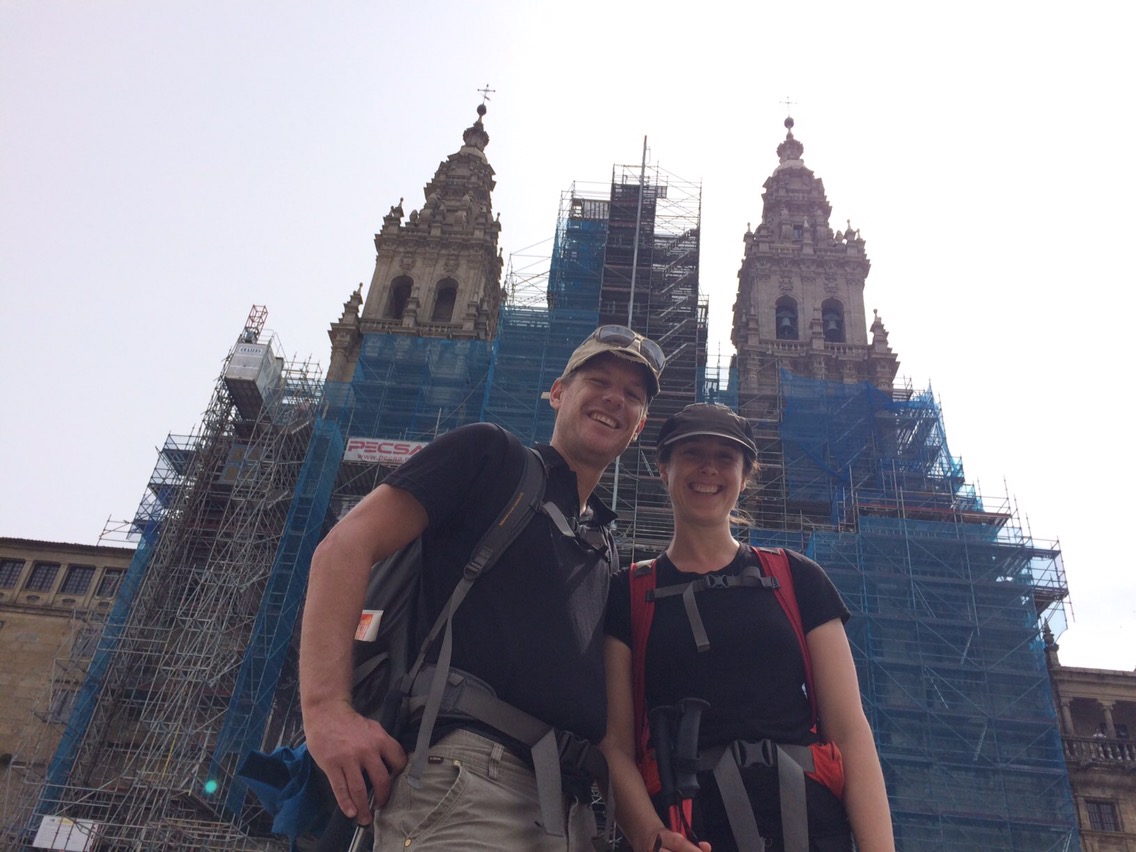
Other: Good to finish and met up with quite a number that we met on the trip (including Yan!). Also, arranged to meet Crystal 10km out and walk in with her which was nice.

Anyway all done!

Camino Blog – Day 36

Arzua to Pedrouzo

Welcome to this Camino Blog. If you are new it might be best to start with the introduction. Otherwise, carry on.
Location: Pedrouzo

Distance: 19.6km – 756.4km total.

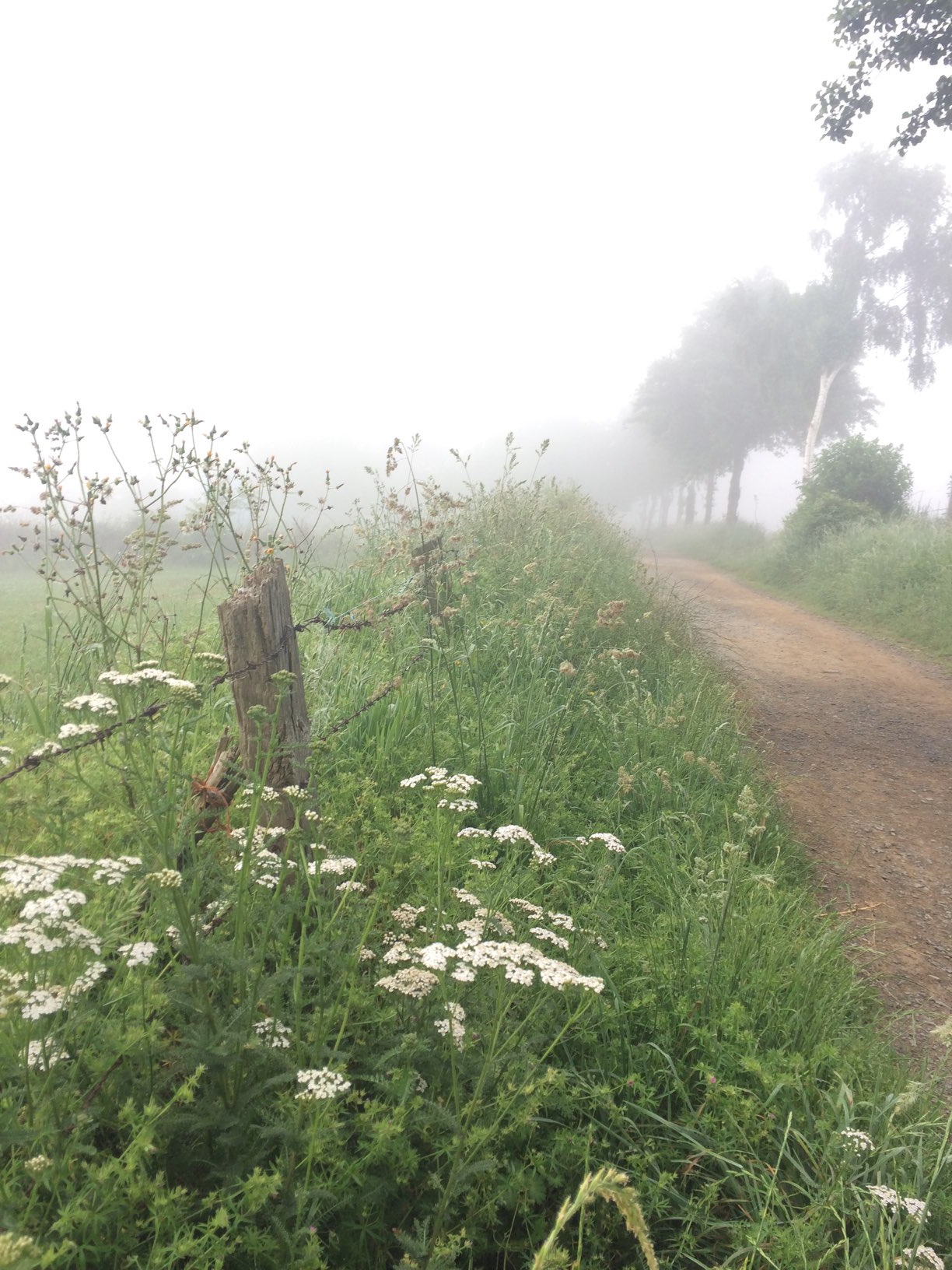
Weather: Fog for most of the walk so once again found myself humming brothers in arms for long stretches. Has burned off now.

Terrain: Another easy day. The track is pretty well formed to cope with the number of people.

Physical condition:Okay but my hip decided that we had finished yesterday and is playing up. I am pretty sure that there is heaps of psycho-somatic things going on here.

Accommodation: Another nice place but the alburges have definitely got larger and more commercially focused now to cope with the number of people

Other: Things are pretty busy. Not overwealmingly so, but you know you are part of a phenomenon.

We are also expecting to meet up with quite a few people today as various itineraries seem to be coming together. Might be an interesting day/night

SB 12: Everything will be made new

-You will make everything new

-I will make everything new

So tomorrow I die, hopefully figuratively, so this SB feels quite relevant today. There is a lot of expectation around arriving at Santiago, most of which will not be met. However, it is difficult not to have some thought that tomorrow could be potentially significant in some way.

At least it will be strange to know that you won’t have to walk on the next day!

At any rate, for us this is the end of this particular bit of life and we will leave this walk behind. We have been doing this for so long that seems a bit strange.

I am also unsure if this will my last post in this series or not. If so, thanks for reading and I hope you enjoyed them.

It may not be completely relevant (although in some ways it is) but since it has been on my mind today I will leave you with the following (note – I think you have to be in website to see YouTube clips)

Pictures:
Leaving today

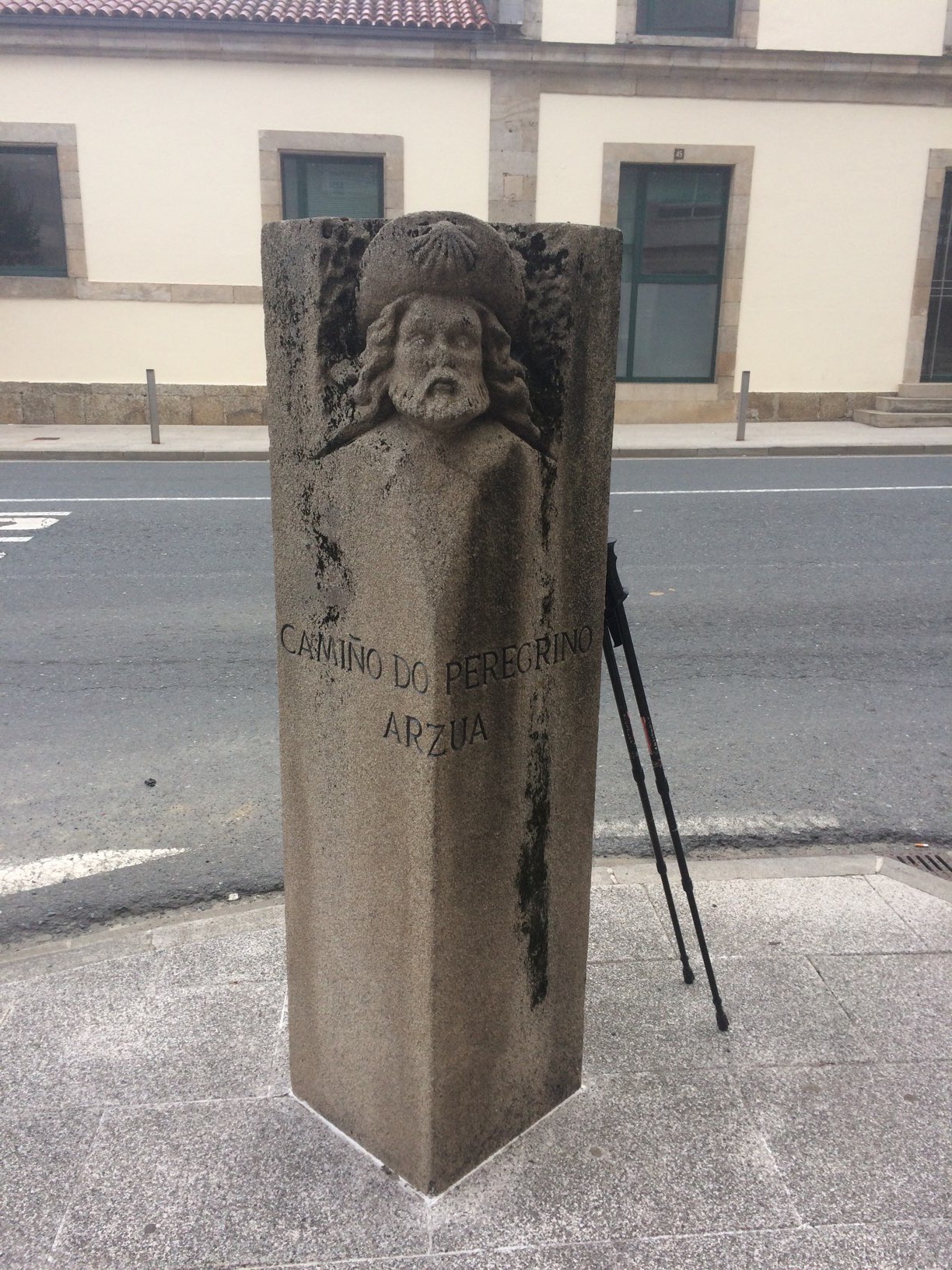
Statue on the way

On the way

Getting busy